In the world of corporate philanthropy, navigating the technology landscape can feel like learning a new language. You hear terms like CSR portals, matching gift platforms, and workplace giving software, and it can be easy to assume they all serve the same purpose. However, understanding the difference between Double the Donation vs. CSR portals is critical for any organization that wants to ensure it’s not leaving funding on the table.
In this guide, we’ll break down what these various solutions do, how they differ, and what steps you can take to grow your impact with each. We’ll cover:
- Understanding the corporate philanthropy landscape
- What are CSR portals? (and which ones to know)
- The role of Double the Donation’s database in corporate giving
- A strategic comparison: Double the Donation vs. CSR portals
- Effectively leveraging BOTH types of tools
Fully comprehending this distinction is the first step toward building a more resilient fundraising strategy. By the end of this guide, you should know exactly how to leverage both types of tech to ensure your organization is maximizing its corporate revenue potential.
Let’s get started!
Understanding the corporate philanthropy landscape
Corporate giving is a massive engine for nonprofit funding. Thousands of companies currently offer matching programs to their employees, effectively doubling the impact of individual contributions. For the vast majority of these corporations, the matching gift process is facilitated online through dedicated CSR platforms. These portals serve as digital hubs where employees can request matches, track their volunteering, and manage their charitable giving.
Unfortunately, most donors still don’t know that their employers offer matching.
Consider the following example:
Sarah is a donor who gives generously to your organization. She works for a company with a robust matching gift program, but she has no idea! After completing her donation, Sarah leaves your website without ever considering her corporate benefits. Because she does not know how to navigate her company’s CSR portal or even that she should be looking for one, the matching gift request is never submitted. The company keeps the money, and your nonprofit loses out on a potential corporate donation.
This lack of awareness turns a potentially doubled gift into a missed opportunity, which is exactly why supporter education is so essential.
What are CSR portals? (and which ones to know)
A Corporate Social Responsibility portal is a CSR software platform that businesses license to manage their charitable initiatives.
These portals essentially act as a clearinghouse. If a company wants to allow its employees to donate to schools or nonprofits through payroll deduction, or to manage which charities are eligible for its matching gift program, it typically uses a CSR portal to facilitate those transactions.
In other words, the portal is the infrastructure of the company’s giving. It handles the nonprofit verification, compliance checks, and final distribution of funds.
So, what does that mean for charitable organizations like yours? As a nonprofit fundraiser, you need to register your cause with these portals to become eligible for companies’ giving programs.
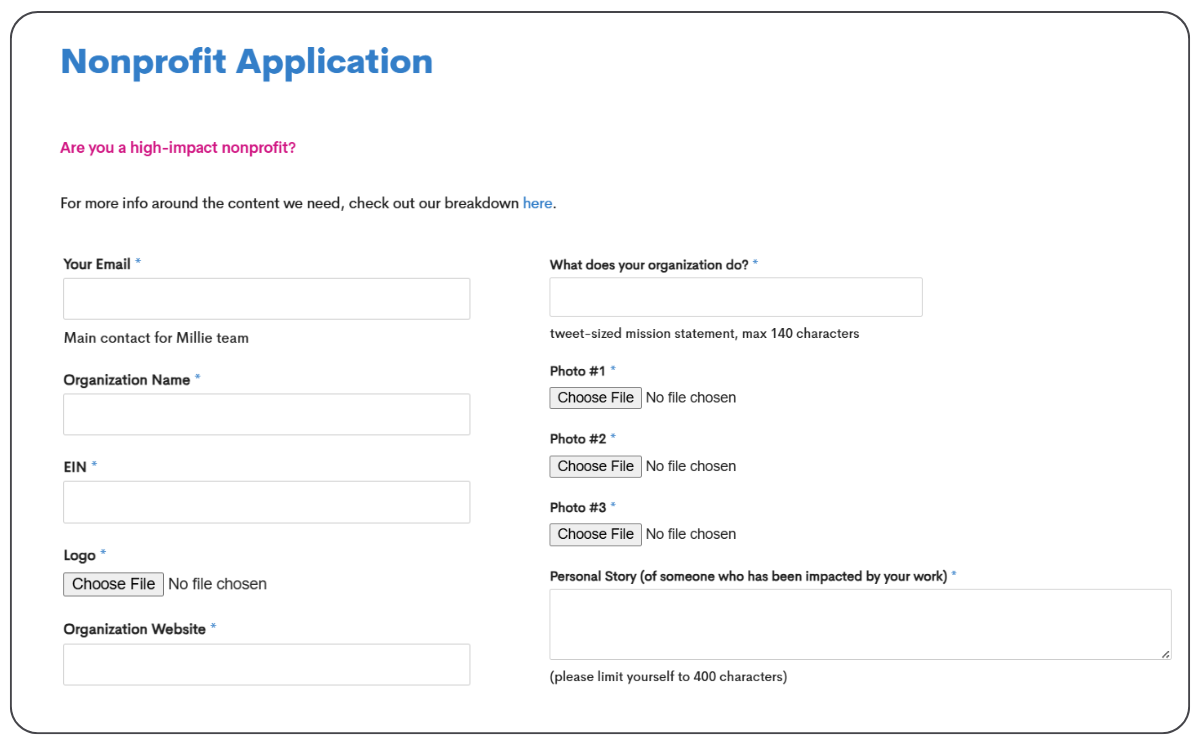
There are several platforms to consider as you build out your strategy. We’ve listed some below, along with links to their registration pages, to get you started.
- Benevity: complete the nonprofit application here →
- YourCause: complete the nonprofit application here →
- Nonprofit Hub (fka CyberGrants): complete the nonprofit application here →
- Millie: complete the nonprofit application here →
- POINT: complete the nonprofit application here →
- Givinga: complete the nonprofit application here →
- Field Day: complete the nonprofit application here →
- Uncommon Giving: complete the nonprofit application here →
- Bright Funds: complete the nonprofit application here →
- America’s Charities: complete the nonprofit application here →
Once you’re in their system, you become visible to corporations’ employees. However, being registered is just the start. It does not guarantee that employees will donate to you or request matches from their employers. It simply opens the door.
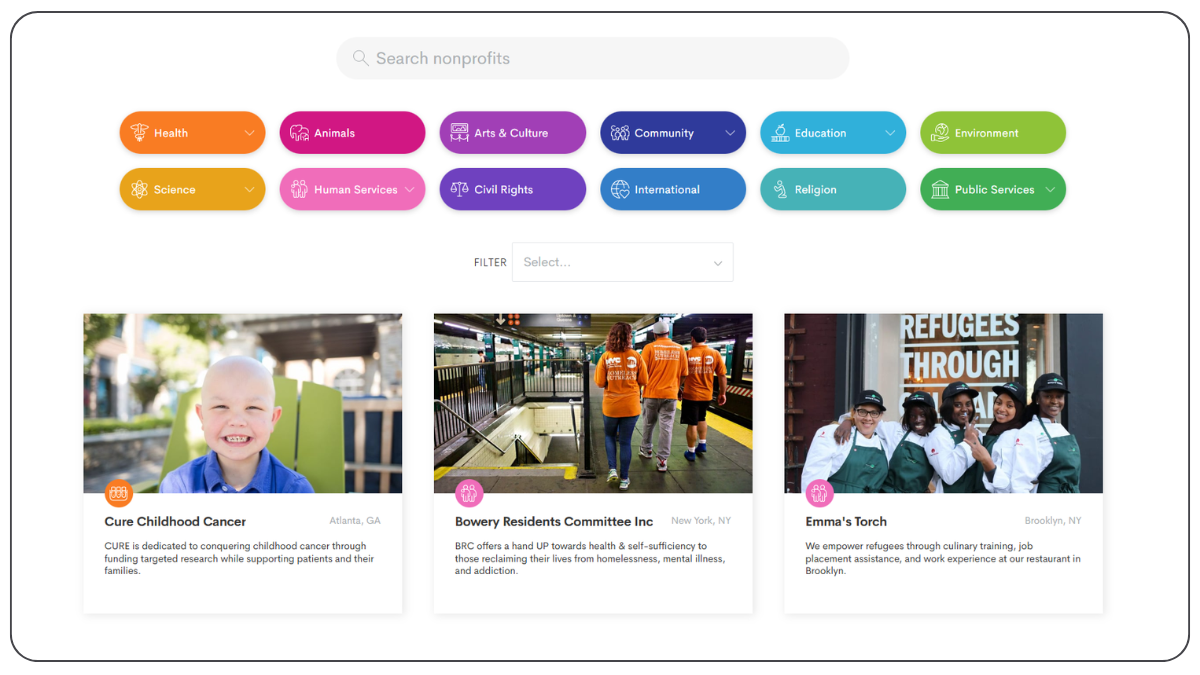
For the best results, ensure your profile information is accurate, up to date, and includes clear mission statements. This way, when an employee searches for a cause, they find yours and feel confident donating or requesting a match.
The role of Double the Donation’s database in corporate giving
Once you’ve gained eligibility status, the CSR portal’s utility from the nonprofit perspective essentially ends. This kind of tool is not designed to help you market your programs, nurture donor relationships, or communicate the value of corporate giving to your supporters.
That’s where Double the Donation becomes essential.
After conducting our own due diligence across the fundraising technology market, the re: Charity team has concluded that Double the Donation stands out as the clear leader in matching gift database provision (check out our full analysis here!), offering a proactive marketing engine that sits directly on your website and donation forms.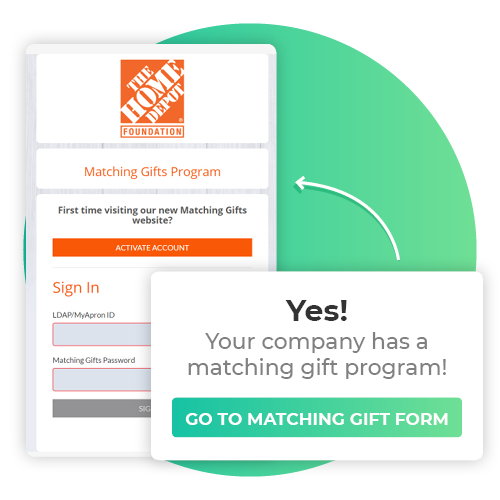
Because research indicates that 78% of donors do not know whether their employer offers matching gifts or other workplace giving programs, Double the Donation supplies a searchable database and automation tools to guide donors directly to their company’s specific CSR portal or submission form.
Think of it this way: The CSR portal is the bank vault where the money is stored. Double the Donation is the map that leads the donor directly to that vault and provides the combination to open it. Without the map, the donor is just standing in the bank lobby, wondering why the money never arrives.
A strategic comparison: Double the Donation vs. CSR portals
To truly understand how these systems work together, it helps to think of them as separate pieces of the same fundraising engine.
- CSR portals are essentially the destinations where corporate dollars live. They are highly structured, internal platforms where companies manage their budgets, compliance, and employee data. Because their primary goal is to manage the company’s internal programs, they are often difficult for a nonprofit to influence directly or to use as a marketing tool.
- Double the Donation, on the other hand, serves as the bridge between your donor and those corporate destinations. Double the Donation is the resource that identifies available matching gift opportunities and follows up with eligible donors to drive their requests to completion.
You cannot use a CSR portal to market your mission to a donor, and you cannot use Double the Donation to process a corporate grant application. By understanding this distinction, you stop viewing them as competing technologies and begin to see them both as essential partners in your revenue strategy.
The following table provides a streamlined overview:
| Feature | CSR Portals | Double the Donation |
|---|---|---|
| Primary User | Corporations and employees | Nonprofits and schools |
| Main Goal | Manage internal CSR programs | Identify and drive matching gift revenue |
| Where it Lives | Corporate intranet or internal site | Nonprofit website or donation page |
| Data Focus | Employee activity and company budget | Donor eligibility and matching gift instruction |
| Action Required | Registration or verification | Integration or automation |
Effectively leveraging BOTH types of tools
It’s clear that these tools address different needs within your nonprofit’s greater infrastructure. Relying solely on CSR portals means waiting for donors to find you on their own, leading to lower submission rates and more unclaimed revenue. Conversely, using Double the Donation without registering for CSR portals creates a dead end where donors want to participate but have nowhere to submit their forms. You need both to create a seamless journey that turns a standard donation into a corporate-matched contribution.
Registration with a CSR portal is a passive activity. It makes you eligible, but it does not drive results on its own. Double the Donation provides the proactive outreach necessary to capture revenue. You need the portal’s infrastructure and the marketing power of a dedicated workplace giving platform to convert intent into impact.
Without a matching gift automation platform like Double the Donation, you are waiting for a donor to magically know they are eligible, go to their company intranet, remember your name, and submit the request. With Double the Donation, you are actively identifying that donor, emailing them tailored instructions, and helping them close the loop while their interest is at its peak.
Frequently asked questions: Double the Donation vs. CSR portals
We get it: understanding the differences among various corporate-giving-related platforms can be complicated. Still have questions? Hopefully, these common questions and answers can help clarify things.
#1: Is Double the Donation a CSR portal?
No. Double the Donation does not manage employee funds, nor does it approve grants on behalf of corporations. Instead, it is a fundraising and marketing enablement platform for nonprofit users. It helps organizations identify which companies their donors work for, prompting them to use the CSR portals they already have access to.
#2: Why do I need other tools if I have a CSR portal?
Relying solely on a CSR portal is passive fundraising. To maximize revenue, you must be active. You need tools to identify opportunities, nurture donors, and optimize your overall giving strategies.
CSR portals are designed to make it easy for employees to find and support charities. They do not handle marketing your nonprofit to employees. If you are not listed on a CSR portal, you will struggle to receive funds, but simply being listed will not bring in donations.
#3: How do I know if my organization is already registered with a CSR portal?
Most CSR platforms have a cause search feature on their public-facing side. If you cannot find your organization listed, it likely means you have not completed the verification process.
Contact the CSR software provider to request a registration link for your nonprofit, or conduct a quick Google search of “registering a nonprofit with [CSR vendor name].” Doing so should pull up relevant web pages to help you kick off your application process.
#4: Does my nonprofit have to pay for CSR portal access?
Generally, nonprofits do not pay to register with CSR portals. These platforms want to offer their corporate clients a wide, diverse range of eligible nonprofits, so they keep the registration process free to ensure maximum participation from the charitable sector.
It’s a win for the portal because they have a robust database, and it’s a win for you because you gain access to a potential pool of corporate donors.
#5: Will using both types of platforms be too much work for my nonprofit team?
Believe it or not, it’s actually less work for your team. Using a tool like Double the Donation empowers you to automate the identification and communication you would otherwise handle manually. Rather than searching for the right form for every single donor, the software does it for you, saving you significant time that can be reinvested in other mission-critical activities.
Wrapping Up & Next Steps
Understanding the difference between CSR portals and Double the Donation is not just an academic exercise. It’s essential for your revenue growth.
CSR portals serve as the infrastructure for corporate giving, while Double the Donation serves as the bridge connecting your donors to that infrastructure.
By registering your nonprofit with major portals, you ensure you are eligible to receive funds. And by employing Double the Donation to market these programs to your supporters, you ensure that you actually receive them. When these two systems work in tandem, you eliminate the awareness gap and position your nonprofit to capture every available matching-gift dollar.
Want to see how your nonprofit can close the awareness gap? Start growing your revenue with Double the Donation today.