According to Double the Donation’s statistics, 100% of surveyed nonprofits reported that challenge matches and grants led to an increase in campaign dollars raised. Not to mention, the presence of a challenge match also increases dollars raised per solicitation by ~19% compared to appeals without one.
Development teams face mounting pressure during seasonal fundraising drives, annual giving days, and milestone appeals. Fundraisers must constantly balance donor acquisition goals with internal operational limits, all while striving to make every solicitation resonate in crowded inboxes.
A challenge match reassures donors that every contribution creates immediate, amplified impact.
However, modern matching campaigns can no longer rely on cumbersome spreadsheets or manual tallies. Dedicated challenge grant software lets development teams automate milestone tracking, spark donor urgency, and maximize revenue during high-stakes campaigns. By removing manual administrative hurdles and dynamically displaying matching progress, organizations can focus on mobilizing their communities and multiplying donor contributions.
What is challenge grant software and why do modern fundraisers need it?
Challenge grant software represents specialized fundraising technology engineered to manage, display, and automate milestone-driven matching pledges from major benefactors, private foundations, or corporate partners. Instead of processing contributions in isolation, these platforms connect individual gifts directly to a larger conditional matching pool.
This architecture differs fundamentally from traditional 1:1 employee matching. In standard matching gift setups, an employer matches an individual worker’s donation after the gift is finalized. Conditional challenge campaigns, by contrast, unlock large lump-sum pools only after a campaign meets strict predefined milestones, such as hitting a total dollar amount or reaching a designated count of unique contributors within an active window.
Relying on purpose-built challenge grant software resolves several critical operational roadblocks:
- Eliminating manual spreadsheet tracking: High-velocity giving days generate hundreds of donations an hour, making manual spreadsheet reconciliation slow, stressful, and error-prone.
- Removing donor skepticism through social proof: Transparent visual elements, such as dynamic progress meters and live milestone counters, reassure supporters that the match is legitimate and actively deploying.
- Automating real-time impact validation: Donors receive instant confirmation that their specific contribution helped push the campaign over a milestone threshold or unlocked the next matching tier.
Essential features to look for in a top challenge grants tool
The digital infrastructure supporting your matching initiative determines whether your appeal goes viral or stalls due to technical friction. When evaluating potential challenge grant software, development directors should assess five functional capabilities:
- Automated threshold and unlock triggers: The platform must dynamically release matching funds as soon as your campaign hits its targeted dollar or donor totals, avoiding manual staff intervention.
- Dynamic gamification widgets: Embeddable visual progress bars, live countdown clocks, and segmented leaderboards visually demonstrate the matching pool depleting in real time.
- Layered challenge architecture: Advanced tools support concurrent mini-challenges across departments, board-level unlocked gifts, and short-term flash matches during traditionally slow giving windows.
- Workplace giving and employer match integration: Providing donors with an embedded workplace giving search tool enables supporters to trigger corporate matches alongside the challenge, unlocking an exponential multiplier.
- Turnkey CRM and payment integrations: Automated data pipelines should route donor records, match compliance logs, and disbursement data directly into your primary database without requiring manual exports.
4 leading fundraising platforms with challenge grant functionality
Nonprofits require robust software solutions that combine automated matching logic with intuitive front-end user experiences. Below is an assessment of leading tools that support matching gift automation and milestone challenges.
Givebutter
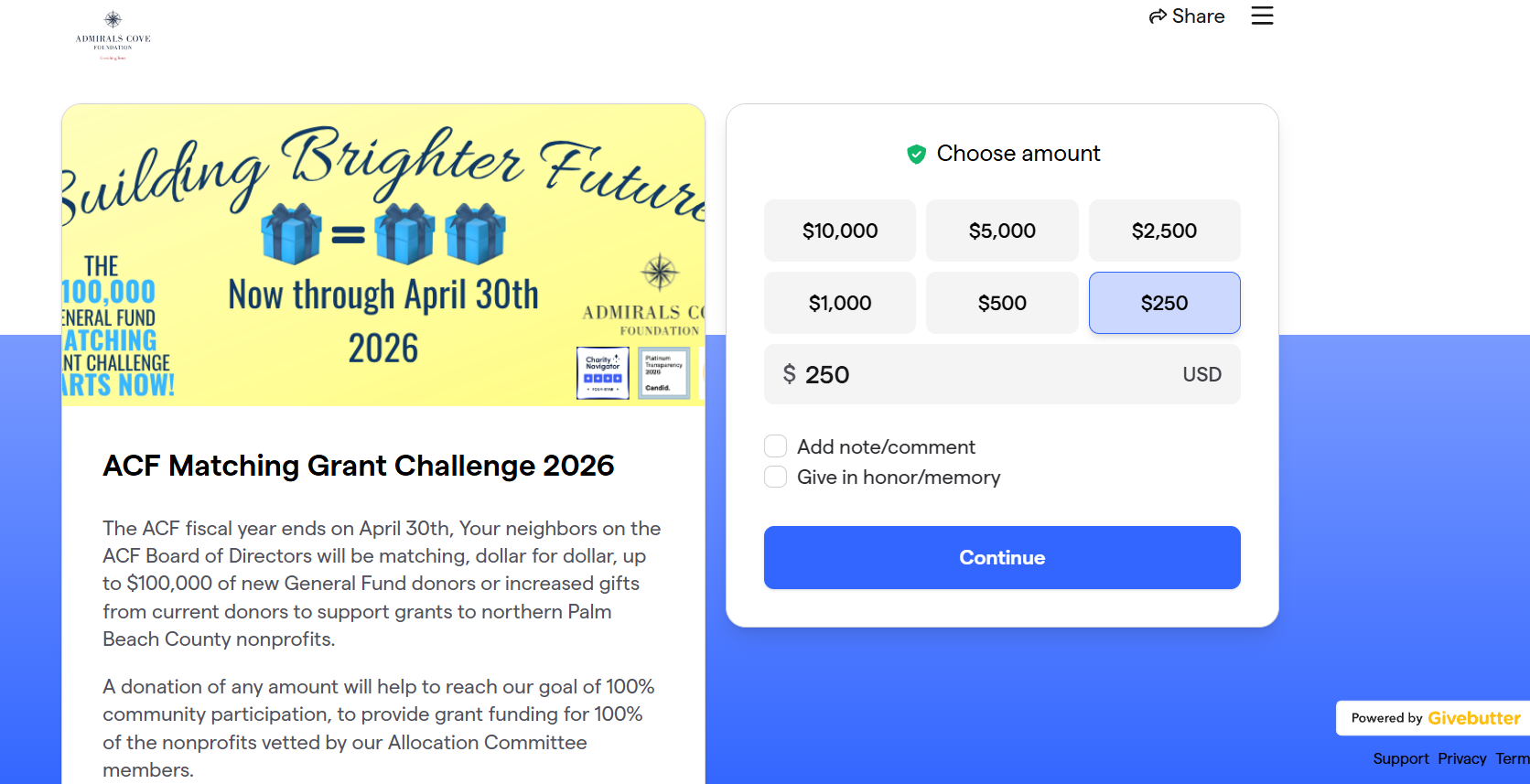
Givebutter is an accessible, modern digital fundraising platform that integrates donation forms, donor management, and interactive campaign mechanics into a centralized dashboard.
Standout features:
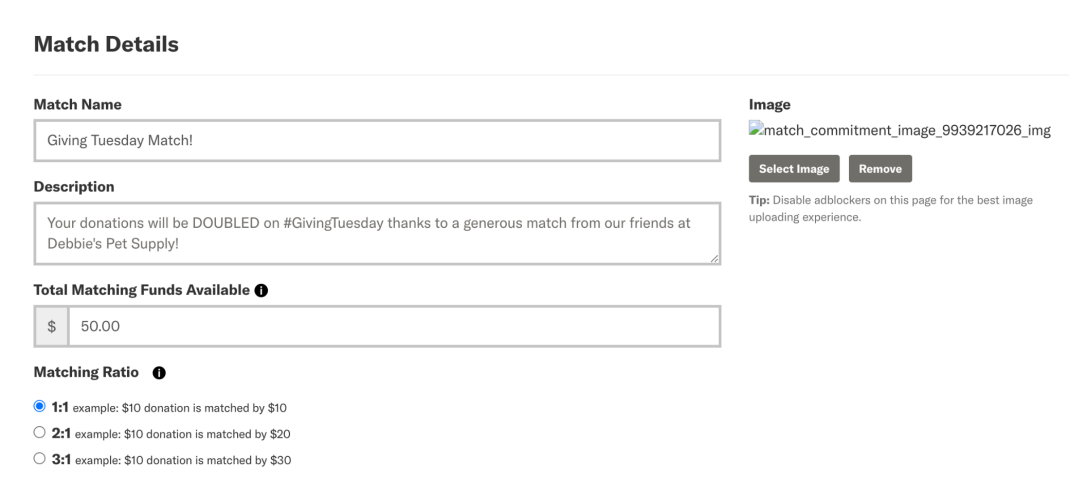
- Native matching gift engine that displays corporate sponsors, applies custom matching ratios such as 1:1 or 2:1, and sets overall pool limits
- Supporter activity feed that features social likes, comments, and public donor recognition alongside matching milestones
- Integrated digital wallet processing supporting Apple Pay, Google Pay, and Venmo directly on challenge forms
Pros:
- Straightforward self-service setup that lets organizations launch interactive campaigns in minutes
- Clear visual progress meters that showcase matching dollar allocations for every transaction
Cons:
- Setting up multi-tiered milestone unlocks, such as releasing funds only after 50 distinct donors participate, often requires manual adjustments
- Platform branding remains visible on donation interfaces unless the organization subscribes to custom enterprise tiers
GoFundMe Pro
GoFundMe Pro (formerly known as Classy) offers an enterprise-level fundraising suite engineered for large-scale giving days, distributed peer-to-peer campaigns, and multi-chapter nonprofit institutions.
Standout features:
- Native matching mechanics built directly into standard campaign templates and peer-to-peer team leaderboards
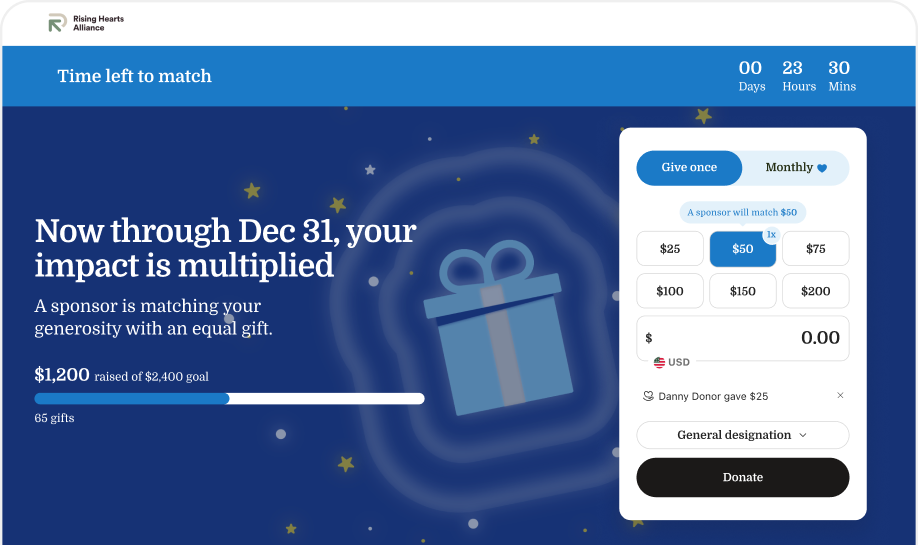
- Dynamic campaign visualizers that recalculate campaign progress as soon as matching milestones are fulfilled
- Segmented administrative controls designed to allocate specific challenge funds across distinct programs, university departments, or regional branches
Pros:
- Proven system stability and server uptime during massive transaction spikes and national giving days
- In-depth campaign reporting that details donor conversion patterns across various challenge levels
Cons:
- Annual software licensing costs can represent a significant hurdle for smaller community initiatives
- Initial configuration and custom branding workflows typically demand dedicated technical resources and team training
GiveGab
GiveGab by Bonterra specializes in regional giving days, higher education campaigns, and community foundation drives that unite multiple charitable causes under a single umbrella.
Standout features:
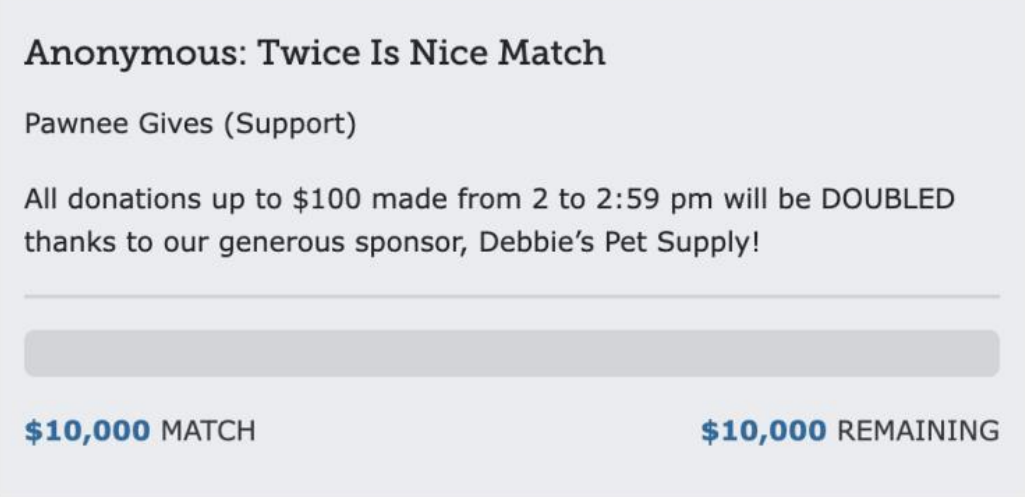
- Dedicated challenge and prize module designed specifically to manage gamified giving day incentives
- Flexible campaign rules supporting both time-delimited flash matches and community-wide donor volume goals
- Public sponsor cards that spotlight foundation backers and corporate matching sponsors across event dashboards
Pros:
- Tailored architecture that can handle decentralized matching funds across hundreds of participating initiatives at once
- Automated leaderboard recalculations that foster healthy, friendly competition among participating teams and schools
Cons:
- Primarily tailored for short, concentrated giving days rather than evergreen, year-round matching initiatives
- Less practical for teams seeking a straightforward, single-purpose donation form for everyday appeals
CauseVox
CauseVox provides an adaptable fundraising tool focused on community-driven peer-to-peer appeals, crowdfunding projects, and custom giving interfaces.
Standout features:
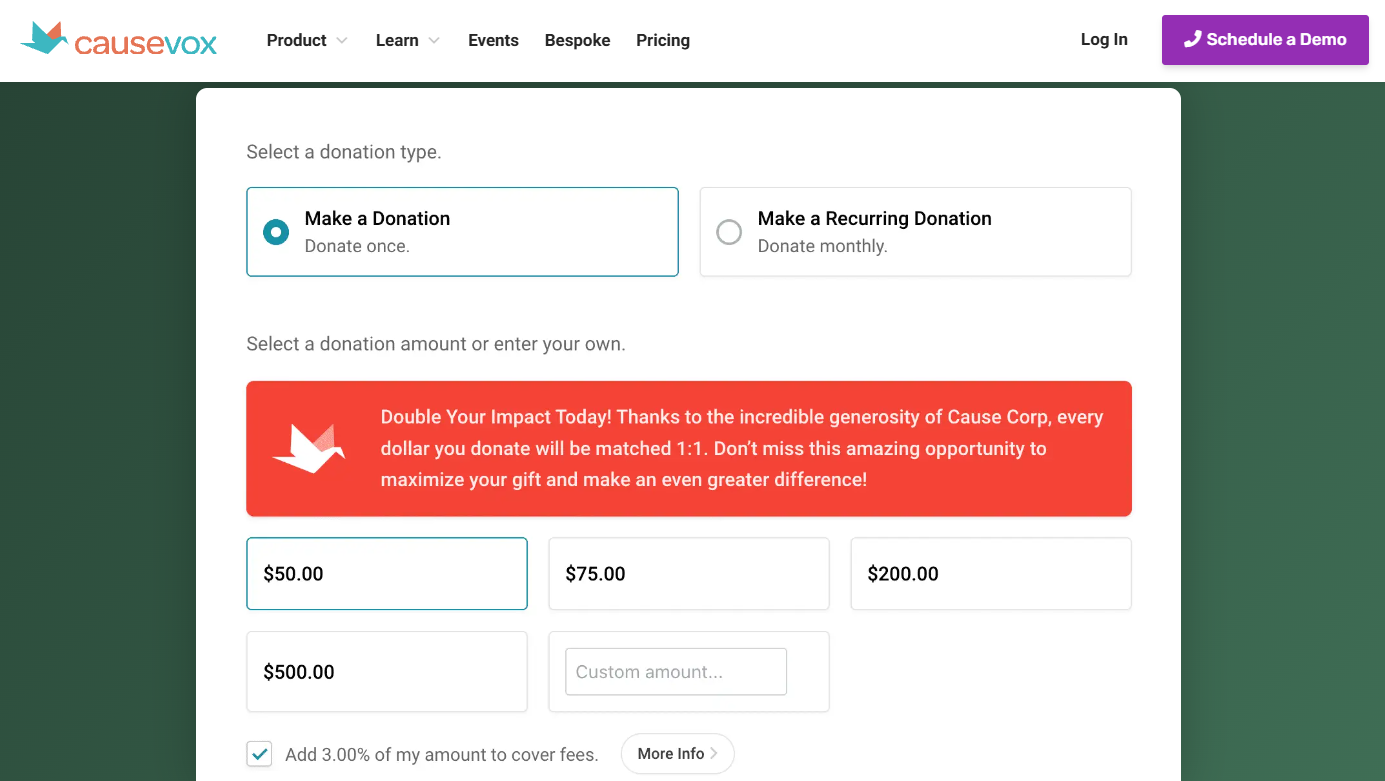
- Modular site designer complete with embedded match progression counters and digital achievement badges
- Scarcity-driven displays that reveal remaining matching pool dollars in real time to encourage prompt gifts
- Dedicated personal and team fundraising dashboards outfitted with localized match indicators
Pros:
- A user-friendly visual editor that lets non-technical team members build and modify campaigns without custom coding
- Mobile-responsive page performance optimized for donors arriving through social media channels
Cons:
- Lacks native workplace giving automation, requiring outside software connections to screen and submit corporate matching gifts
- Offers limited native automation for executing complex, multi-tiered corporate release agreements
Strategic best practices for executing a challenge grant campaign
Securing a dedicated software platform is only the first step. To generate record-breaking returns, development teams must execute their campaigns with strategic precision.
Securing and structuring matching pools with high-impact partners
Approach board members, family foundations, and local corporate leaders with a proposition centered on leverage. Traditional major gifts are often deposited quietly into operating accounts; challenge gifts, by contrast, serve as catalytic tools that mobilize wider public investment.
When pitching potential matching benefactors, frame their gift as the engine that inspires hundreds of secondary donations. Establish clear campaign ground rules before public launch. Here’s what we recommend:
- Define clear match ratios. Standard 1:1 ratios are easy to understand, while higher 2:1 ratios can ignite rapid participation during competitive drives.
- Establish strict time boundaries. Confining the challenge to a 24-hour flash window or a 48-hour sprint maintains momentum and eliminates donor procrastination.
- Set definitive unlock criteria. Establish threshold conditions, such as releasing a secondary $10,000 corporate pledge only after 150 unique contributors join the cause.
Top tip: DAF holders can make some of the best challenge match partners! Read up on how to leverage Donor-Advised-Funds for challenge matches here.
Combining challenge matches with workplace giving automation
The most effective development strategies layer multiple matching mechanisms together into a unified revenue engine. By uniting challenge pledges with everyday employer matching gifts, organizations unlock a substantial funding multiplier that’s sometimes referred to as a “stacked match.”
Ensure your challenge donation forms feature an embedded workplace giving lookup tool. This allows supporters to check their employer matching eligibility while making their gift.
For instance, when a supporter contributes $50 during an active 1:1 challenge, that contribution unlocks $50 from the challenge pool. If that donor works for an employer with a standard dollar-for-dollar matching policy, their company provides another $50. A single $50 transaction quickly translates into $150 of net funding for your cause. Automated post-gift reminders help supporters finalize these corporate claims after the initial campaign rush.
Communicating urgency and milestones across channels
A matching campaign requires proactive, structured outreach across its entire lifecycle. Consider these recommendations for communicating well throughout your challenge grant campaign:
- Build a timed communication cadence. Schedule official launch announcements, midpoint status check-ins, and final countdown warnings across email and SMS channels.
- Broadcast micro-milestones on social channels. Keep followers invested with granular updates, such as noting when your organization is just 15 donors away from securing the next matching tier.
- Equip volunteer advocates. Give peer-to-peer fundraisers ready-to-use email copy and social graphics that emphasize that every gift made today carries double the impact.
Next steps for maximizing your matching campaign impact
Modern challenge grant software transforms fundraising from a series of passive requests into an active, community-wide movement. And it’s not just for the largest organizations, either! By automating complex tracking rules, providing visible social proof, and eliminating manual data entry, even a small nonprofit staff can focus on building meaningful relationships with major benefactors and everyday supporters alike.
Take time to review your upcoming fundraising calendar and pinpoint key giving days or seasonal appeals that would benefit from conditional matching mechanics. Once you have identified those target dates, reach out to corporate sponsors and major donors to secure foundational matching pledges well in advance. Equip your digital donation pages with automated workplace giving and matching tools to turn conditional pledges into lasting, amplified funding for your mission.